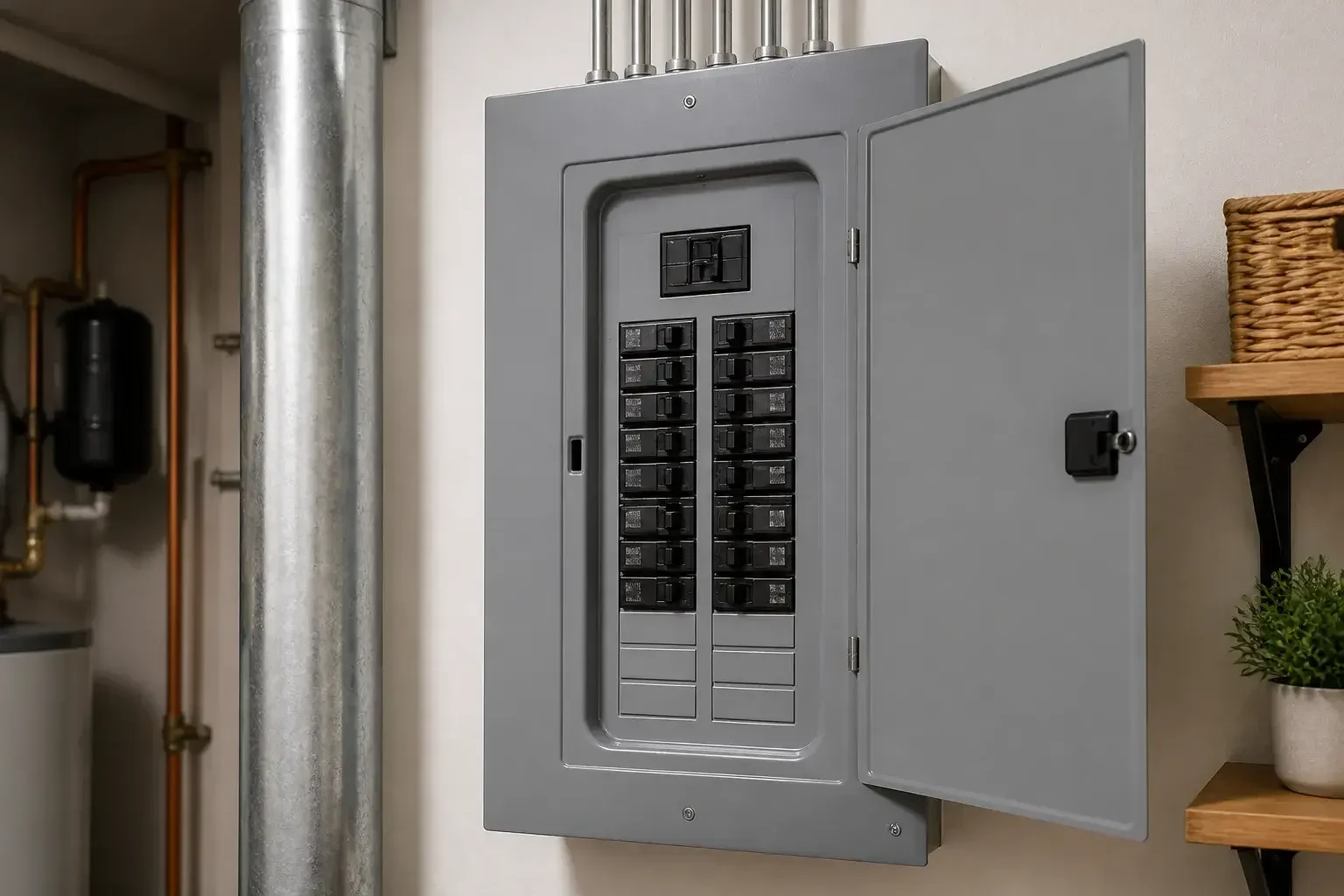
Electrical Services in Spokane, WA
Panel Upgrades in Spokane, WA
Outdated electrical panels can limit capacity and leave your home struggling to keep up.
If your breakers trip when the microwave and laundry run at the same time, your panel may be telling you it is out of room. Flickering lights, buzzing at the panel, or a burning smell near the service equipment are not small annoyances. They are signs that your home may be asking for more power than the panel can safely handle.
Northgate Electric helps homeowners in Spokane with panel upgrades that make room for today’s electrical demands. If you are adding new appliances, planning an EV charger, or dealing with repeated electrical issues, we can evaluate the panel and replace outdated components with a setup that fits the way you actually live.
Warning signs
A panel upgrade is often the right next step when your home starts showing patterns, not just one-off glitches. The panel may still work, but it may no longer support the number of circuits or the amount of load your household needs.
Common symptoms
- Frequent breaker trips: Breakers that trip during ordinary use often point to a panel that is overloaded or no longer matched to the home’s demand.
- Flickering or dimming lights: If lights dip when large appliances start up, the system may be struggling to distribute power evenly.
- Limited spare spaces: A full panel can make it hard to add new circuits for lighting, appliances, or an EV charger.
- Warm or noisy equipment: Heat, buzzing, or crackling around the panel should be checked before the issue gets worse.
- Resetting becomes routine: If you are constantly walking to the panel to reset breakers, the problem is no longer just inconvenient.
These signs do not always mean the panel must be replaced immediately, but they do mean the system should be looked at with care. A proper upgrade can solve capacity problems before they start affecting daily routines.
Common causes
Panel problems usually show up because the electrical load in a home has changed faster than the panel has. What worked years ago may not be enough now, especially if the home has seen improvements, additions, or newer equipment.
- More devices, same panel: Homes use far more power now than they did when many older panels were installed, and that extra demand can crowd the system.
- Added appliances: New kitchen or laundry appliances can create load spikes that reveal weak points in the panel.
- Outgrown circuit space: When there are no open spaces left, new circuits may require a panel that can support them safely.
- Age and wear: Over time, breakers and internal components can wear down, causing nuisance trips or poor performance.
- Project upgrades: Adding lighting, making electrical repairs, or installing an EV charger may push an already full panel past its comfort zone.
Northgate Electric often sees panel upgrades come into focus when homeowners want to make practical changes to the house. Instead of working around a cramped panel, the better move is to bring the panel up to the level your home now needs.
What we check
Before recommending a panel upgrade, we look at how the existing system is behaving and whether the panel itself is the source of the problem. The goal is to understand the home’s current demand, not just the visible symptoms.
Review points
- Breaker performance: We look for breakers that trip too often, feel loose, or no longer behave predictably.
- Available capacity: We assess whether the panel has enough room and capacity for the circuits your home uses now.
- Condition of the equipment: We check for signs of wear, overheating, corrosion, or past work that may not have been done cleanly.
- Load concerns: We consider how major appliances and new electrical additions affect the system during normal use.
- Future needs: We factor in upcoming projects so the new panel can support them without becoming cramped again too soon.
That check matters because panel upgrades are not one-size-fits-all. Some homes need a replacement because the panel is full. Others need a larger or better-organized setup because the current one cannot keep up with the way the house is used.
Upgrade options
A panel upgrade can take different forms depending on what your home needs. Some projects are straightforward replacements, while others require a more complete rework of the panel layout so circuits are easier to manage.
Common directions
- Full panel replacement: This is often the right move when the existing panel is outdated, crowded, or no longer performing well.
- Capacity increase: If your home needs more room for circuits, a larger panel can create space for future electrical needs.
- Circuit reorganization: Sometimes the panel can be arranged more cleanly so the system is easier to use and less likely to feel overloaded.
- Support for new loads: If you are planning an EV charger or other higher-demand addition, the panel may need to be adjusted to handle it properly.
In Spokane, many homeowners are not just looking for a repair. They want a panel that fits current use without constant workarounds. A good upgrade does exactly that, giving the house a cleaner, more capable electrical foundation.
How the work goes
Panel work should feel organized, not confusing. We explain the plan before the job starts so you know what is being changed and why it matters. If there are choices to make, we talk through them in plain language.
- Initial look: We review the current panel and the symptoms you have noticed.
- Planning: We determine the best upgrade path based on the home’s actual electrical needs.
- Panel work: We replace or reconfigure the equipment so the panel can better support the home.
- Circuit check: We verify that the system is arranged correctly and that the breakers are serving the right loads.
- Final walkthrough: We review what was done and answer questions about the new setup.
The main goal is simple: replace uncertainty with a panel that is easier to live with. If your home has been dealing with nuisance trips or a lack of capacity, a careful upgrade can remove a lot of daily friction.
Why it matters
A panel upgrade is not only about preventing nuisance trips. It can also make future electrical changes much easier. If you are planning lighting installation, a new appliance circuit, or an EV charger, the panel is the place where those projects either fit smoothly or become a problem.
Northgate Electric helps homeowners across Spokane Valley, Liberty Lake, and Cheney as well as Spokane when the existing panel is no longer keeping up. For many homes, the panel is the difference between an electrical system that feels limited and one that can handle everyday use without constant interruptions.
A better panel also makes the rest of the home easier to manage. When circuits are sized and organized correctly, it is easier to see what is happening when something trips, and it becomes less likely that one part of the home will disrupt another. That is especially useful in homes with growing power needs or a history of patchwork electrical work.
Choosing next steps
If you are not sure whether your panel needs a full upgrade or just a closer look, start with the signs. Repeated breaker trips, dimming lights, or a panel that is out of room are all worth paying attention to. If you are adding an EV charger or updating your lighting, it is smart to consider the panel before the project gets underway.
The right next step is not guessing. It is having the panel reviewed by Northgate Electric and deciding whether the existing setup can still do the job or whether it is time for an upgrade that better suits the home.
Common questions
How do I know if my panel is too small?
If your breakers trip often, your lights dip under load, or you have no open spaces left for new circuits, the panel may be undersized for your home’s current needs.
Can a panel upgrade help with an EV charger project?
Yes. Many EV charger installations depend on enough panel capacity and available circuit space, so the panel is often the first thing to review.
What if my panel is old but still working?
A panel can still function and still be a poor fit for the home. If it is full, noisy, or causing repeated issues, an upgrade may still be the practical choice.
Do panel upgrades help with flickering lights?
They can, especially when the flickering happens because the system is strained by high demand or poor panel performance.
Is it possible to upgrade the panel before it becomes a bigger problem?
Yes. Many homeowners choose to upgrade once they start planning new electrical work or notice a pattern of issues, rather than waiting for a major disruption.
What kinds of homes usually need panel upgrades?
Homes with aging panels, limited circuit space, or newer electrical demands often need upgrades sooner than expected, especially if appliances or added equipment are pushing the system harder than before.
How We Work
A Clear Electrical Process
Every project starts with a close look at the issue and a simple explanation of what comes next.
- 01
Assess the Problem
We review the electrical issue or project goal before recommending a solution.
- 02
Explain the Plan
You get a clear explanation of the work, the options, and the expected outcome.
- 03
Complete the Work
We finish the job carefully and leave the space tidy.
FAQ
Common Electrical Questions
If you have a question about your home’s electrical system, send a message and we will help you think it through.
Do I need a panel upgrade or just a repair?
That depends on the age and condition of the panel, along with the problem you are seeing. An inspection helps determine the better fit.
Can you install an EV charger at my home?
Yes, if your electrical setup can support it and the right location is available. We can review the setup and discuss the installation.
Why are my lights flickering?
Flickering lights can point to a loose connection, a failing fixture, or a circuit issue. It is best to have the source checked.
When should a home be rewired?
Older wiring, recurring issues, or signs of wear can mean rewiring is the safer long-term choice. We can help evaluate the condition of the system.
How long does electrical work usually take?
The timeline depends on the project size and what we find after looking at the system. Smaller repairs may move quickly, while larger upgrades take longer.
Ready to Update Your Electrical System
Tell us what is happening at your home, and we will help you plan the right next step for repairs, upgrades, lighting, or rewiring.